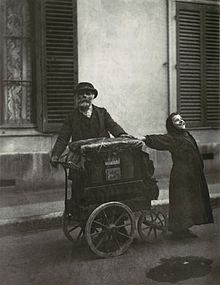
Originally published in Vignette Magazine, November 2011
With the work of Eugene Atget the photographic sub-genre of street-photography could be considered one of the very first uses of the art-form outside of still-lives, portraiture and of course, pornography. Eugene Atget, forced to make a living on the fringes of society, found beauty and inspiration in turning his camera inward toward the people who were unseen or misrepresented, Starting a lineage of outsiders photographers, weirdo’s and misfits; not to mention perverts and the clinically insane, who obsessively photographed the streets on which they lived, showing their subjective view of the streets on which they lived from a gutters-eye view. From Daido Moriyama; skulker of late-night alleyways and brothels in 1960’s Tokyo, Angelo Rizzuto, whose voyeuristic, images of women on the streets of 1950’s New York reflect a tortured, lonely soul whose only friendship was with his lens, and Michael Ackerman in the present day, throwing his camera around and defying all the rules of photography, finding beauty in pain and sorrow, death and escape.

Atget’s inclusion at the beginning of this anti-list of the most veritably unincluded, disenfranchised and excommunicated of photographers, is not happenstance. Starting his career first as a sailor, then an actor and entertainer before moving on to street photography, Atget was never a part of the mainstream or the developing bourgeoisie like so many amateur or jobbing photographers of the late nineteenth century. Working at a time when photography was still largely considered a ‘hobby’ by those that could afford both the time and money to make it one, Atget sold his images on the very streets which he photographed, selling quaint images of Parisian life to local artists as source material for paintings. It wasn’t until the city and the Carnivelet Museum employed him to document the older buildings of Paris due for demolition however, that he found his true calling.
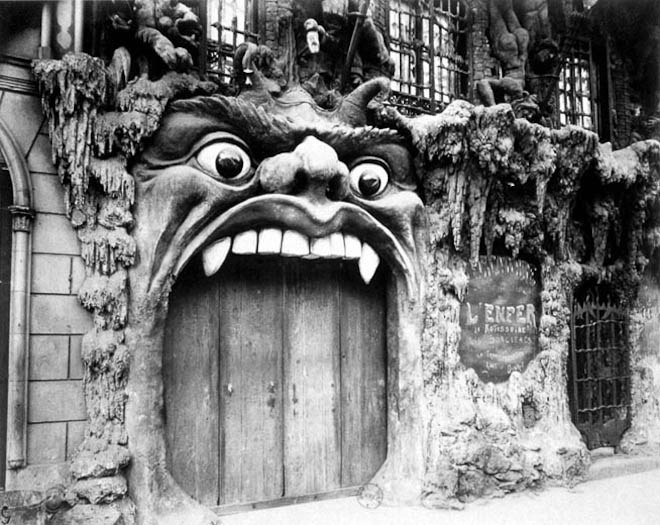
With the sense of order of an obsessive collector, Atget lugged his equipment around the dying slums of Paris. His life-project was in turning his camera to those most like himself, capturing the fading traditions and various self-employments of the lower classes occupying and plying their trade on the street. Atget saw the terrible effect the demolition of old Paris was having on the lives of the people who made their living on those same streets: flower-sellers, rag-collectors, prostitutes and organ-grinders, all living, breathing and disappearing under the streets of Paris. Atget saw it as his duty to document these lives before they were swept under the tide of social reform and emergence of big business along with the very buildings which sheltered them.
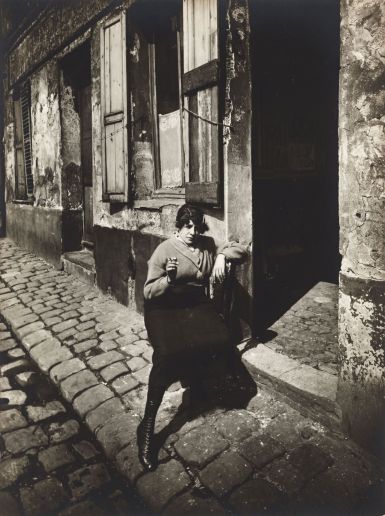
Working at the time of Proust, Atget was a flaneur, an urbanist historian, a psycho-geographer and more. He created a life-long body of work that represented an obsessive attention to a mapping of the city through historical, social and pictorial means reminiscent of Henry Darger’s hallucinatory, lifelong fever dream In the Realms of the Unreal yet with a clarity and intensive sense of self-purpose that would not be seen again in a photographers work until the advent of 35mm film. If Iain Sinclair had written about Montmartre in the 1890’s instead of Hackney in the late-2000’s he might have collaborated with Atget.
Never having earned much money through his employment by the city Atget’s archive was discovered by Berenice Abbot in the 1920’s when he had a studio next door to Man Ray. Abbot introduced his work to Alfred Steiglitz and it went on to influenceWalker Evans and the social documentarians of the New Deal. Having spent 40 years arguing for Atget to be included into the Canon of Masters of Photography, Abbot finally sold his archive to the Museum of Modern Art in 1968. In 1981 MoMA completed its stunning four book release collecting his Paris archives which it had coincided with four separate shows of his life’s work.
 Gavin Francis Maitland